๐Ÿ› 2026 Update: The One Big Beautiful Bill (Public Law 119-21) is now law โ€” updated for confirmed 2026 IRS rates including the $16,100 standard deduction. See 2026 Changes โ†’
TakeHomePayNowCalculator.com
2026 IRS Rates

Travel Nurse Paycheck Calculator & 2026 Tax Guide

Understand exactly what you keep after taxes โ€” and debunk the "50-mile rule" myth that could cost you thousands. Updated for confirmed 2026 IRS rates and OBBB provisions.

โœ“ 50-mile myth debunked ๐Ÿ“Š 2026 GSA per diem rates ๐Ÿ’ฐ OBBB OT deduction included ๐Ÿ”’ No data stored
๐Ÿ’ก Travel Nurse Tax Quick Facts โ€” 2026
Taxable Pay
Base Rate
Federal + FICA taxes apply
Non-Taxable
Stipends
If tax home maintained
50-Mile Rule
โŒ Myth
Not in IRS tax code
OT Deduction
2,500
OBBB Section 70202
Std Deduction
6,100
Single filer 2026

๐Ÿงฎ Travel Nurse Taxable Pay Calculator (2026)

โ„น๏ธ
Enter your taxable base hourly rate only โ€” do not include stipend amounts. Your non-taxable stipends are received separately and are not subject to federal income tax or FICA if you qualify. This calculator estimates take-home on your taxable wages only.
Your clinical hourly wage (not blended rate)
3x12 shifts = 36 hrs/week typical
Housing + meal + incidental stipends (if tax home maintained). Added to results for reference โ€” not taxed.
Taxable Take-Home Pay
$0.00
per period
DescriptionPer Paycheck
๐Ÿ’ต Gross Taxable Payโ€”
๐Ÿ› Federal Income Taxโ€”
๐Ÿ”’ Social Security 6.2%โ€”
๐Ÿฅ Medicare 1.45%โ€”
๐Ÿ—บ State Tax (not included)โ€”
Total Deductionsโ€”
โœ… Taxable Net Payโ€”

โš ๏ธ Bracket-based estimate on taxable wages only. Travel nurse tax situations are complex. Consult a CPA experienced with healthcare staffing for exact figures.

The "50-Mile Rule" Myth โ€” And What Actually Matters

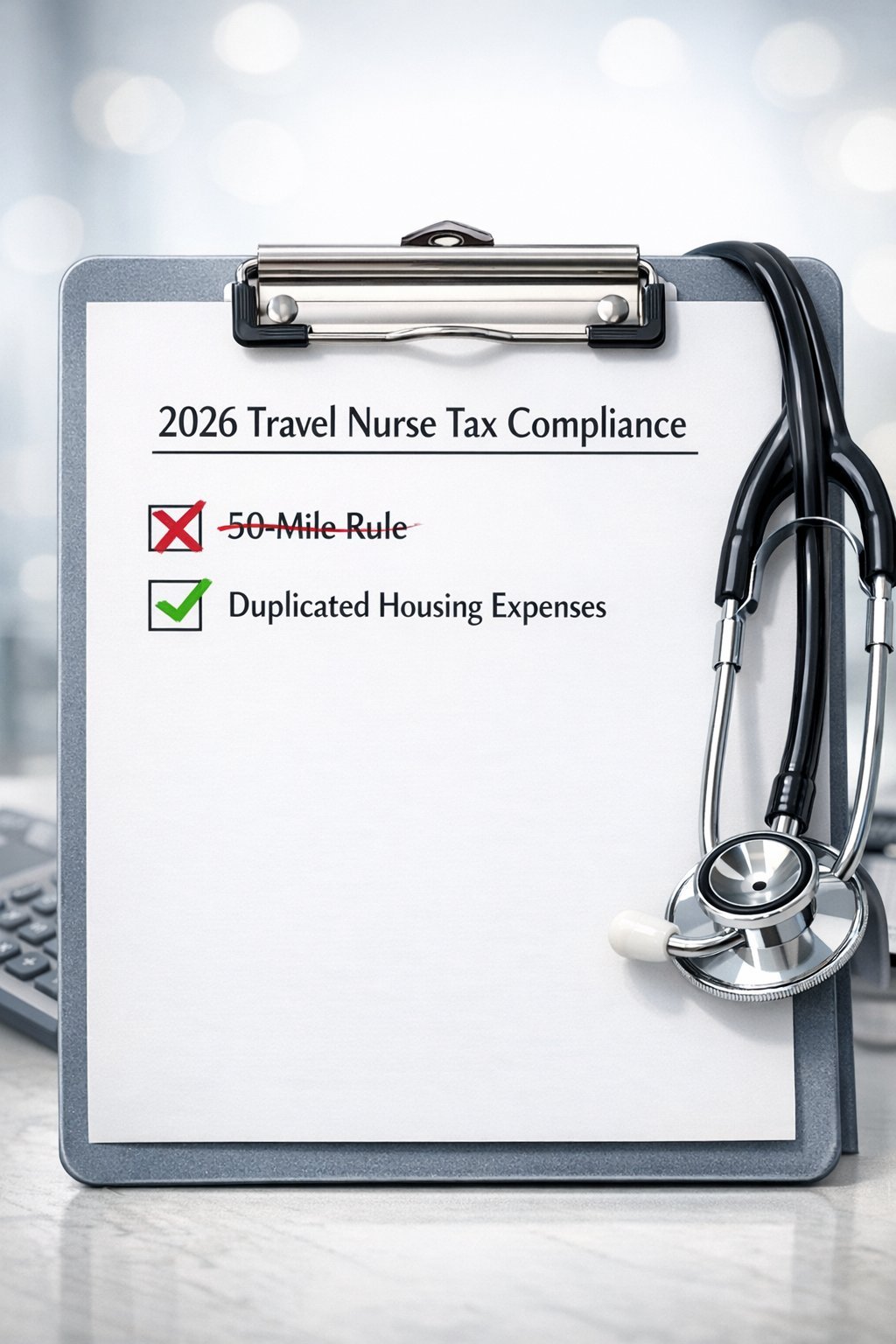
2026 travel nurse tax compliance guide showing the 50-mile rule is a myth and duplicated housing expenses is the correct standard

One of the most costly misconceptions in travel nursing is the "50-mile rule" โ€” the widely repeated claim that if your assignment is more than 50 miles from your home, your stipends are automatically tax-free. This rule does not exist in the IRS tax code.

What the IRS actually requires is:

  1. A legitimate tax home โ€” a location where you have established, ongoing work connections or financial obligations that you return to regularly
  2. Duplicated living expenses โ€” you must be paying for housing both at your tax home AND at your travel assignment location
  3. Temporary assignment โ€” your assignment must be expected to last less than one year in a single location

A nurse who lives with family rent-free in one city and travels 200 miles to an assignment has no duplicated housing expenses โ€” their stipends may be taxable. A nurse who maintains an apartment at home and pays for a furnished rental at their assignment location โ€” even if only 30 miles away โ€” has a much stronger case for non-taxable stipends.

The "Sleep or Rest" Test โ€” What the IRS Actually Requires

The IRS uses the "Sleep or Rest" test to determine if you are genuinely away from home. You must be away from your tax home long enough that rest is necessary to complete your duties. This typically means overnight stays are required. A day-shift nurse who drives 60 miles to a hospital and returns home the same evening fails this test โ€” even if they exceed the fictional "50-mile" threshold.

โœ… The Three Requirements for Tax-Free Stipends
1. Legitimate Tax HomeOngoing work connections + financial obligations at home base
2. Sleep or Rest RequiredAssignment requires overnight stays โ€” cannot commute daily
3. Duplicated ExpensesPaying for housing BOTH at home AND at assignment location
๐Ÿ’ก Meeting all three requirements โ€” not just distance โ€” is what makes stipends tax-free. The IRS can audit and reclassify stipends as taxable income years after an assignment ends. Keep documentation of your home expenses throughout every contract.

The 12-Month Rule โ€” Protect Your Tax-Free Status

IRS regulations state that if you work in the same location for more than 12 months (or expect to), that location becomes your new tax home. Most travel nurses rotate every 13 weeks (91 days) specifically to stay under this threshold. Do not extend a contract beyond 12 months at the same facility without consulting a travel nurse tax specialist first.

2026 GSA Per Diem Rates

The IRS references GSA per diem rates as a reasonable non-taxable allowance for travel expenses. For 2026, rates vary significantly by location:

Location TypeApproximate Daily RateMonthly Equivalent
Standard (non-urban)10 meals + 07 lodging~,510/month
Major metro areas10 meals + 00+ lodging~,300/month
High-cost cities (NYC, SF)10 meals + 00+ lodging~2,300/month

Check GSA.gov for official 2026 per diem rates by city.

๐Ÿ’ฐ 2026 OBBB Benefit for Travel Nurses
No Tax on Overtime (W-2 nurses, FLSA hours >40/wk)Up to 2,500 deduction
Standard Deduction (Single)6,100
401(k) Super Catch-Up (ages 60-63)5,750
๐Ÿ’ก Travel nurses who work over 40 hours in a week may qualify for the OBBB No Tax on Overtime deduction on the 0.5x premium. Confirm your FLSA classification with your agency. See our Overtime Tax Calculator for details.

Frequently Asked Questions โ€” 2026 Travel Nurse Taxes

A tax home is your primary place of business or work โ€” for tax purposes, it is where you live and work when not on a travel assignment. Travel nurses must maintain a legitimate tax home in order to receive non-taxable stipends for housing, meals, and incidentals. If the IRS determines you have abandoned your tax home, all of your stipend income becomes fully taxable. Your tax home is not simply where you choose to live โ€” it must be a location where you have real, ongoing work connections or financial obligations.
No. The "50-mile rule" is an industry myth โ€” it does not appear in the IRS tax code. What actually determines tax-free stipend status is whether you are working away from your established tax home and whether you have "duplicated living expenses" (paying for housing both at home and at your assignment location). The IRS evaluates your actual situation, not a mileage threshold. Many nurses have lost their tax-free status even when assigned more than 50 miles from home because they lacked a legitimate tax home to begin with.
Travel nurse compensation typically has two components: taxable hourly wages and non-taxable stipends. The taxable portion is your base hourly rate for clinical hours worked โ€” subject to federal income tax, Social Security (6.2%), and Medicare (1.45%). The non-taxable stipends (housing, meals, incidentals) are paid on top and are excluded from federal income tax if you qualify. The exact split varies by agency and contract โ€” use this calculator to estimate your take-home on the taxable portion.
The IRS uses General Services Administration (GSA) per diem rates as a reference for reasonable non-taxable travel reimbursements. For 2026, per diem rates vary by location โ€” higher-cost cities like San Francisco and New York have rates over 00/day while lower-cost areas may be 50-200/day. Your agency can pay up to these rates as non-taxable stipends. Amounts above GSA rates become taxable income. Check the official GSA website for current 2026 rates by city.
Yes โ€” if you are classified as a W-2 employee of the staffing agency (which is the case for most travel nurses) and you work more than 40 FLSA hours in a workweek, the 0.5x overtime premium may be deductible under OBBB Section 70202 (up to 2,500/year). This is separate from and in addition to your non-taxable stipends. Confirm your employment classification with your agency.
IRS guidance indicates that if you work in the same location for more than 12 months, or expect to work there indefinitely, that location may become your new tax home. This could make your stipends taxable going forward. Most travel nurses rotate assignments every 13 weeks specifically to maintain their tax home status. Consult a travel nurse tax specialist before accepting extended contracts.
The vast majority of travel nurses are W-2 employees of their staffing agency. This classification is important for several reasons: W-2 employees can receive non-taxable stipends under IRS rules, they are covered by FLSA overtime protections, and they qualify for the OBBB No Tax on Overtime deduction. Some agencies offer 1099 arrangements but these eliminate your ability to receive tax-free stipends and typically increase your total tax burden. Always consult a travel nurse tax professional before choosing 1099 status.
Calculate your taxable take-home using our calculator with your base hourly rate (not the "blended" rate that includes stipends). Then add your non-taxable stipends back โ€” since those are received free of federal income tax and FICA taxes. Your actual take-home = (taxable hourly wages minus federal tax and FICA) + non-taxable stipends. For example, a nurse earning 5/hr taxable + ,800/month non-taxable stipends on a biweekly schedule: taxable take-home ~,650 + stipends 00 = ~,550 biweekly.

Related 2026 Tax Calculators